📄 Digital book in PDF · read it on your phone or print it
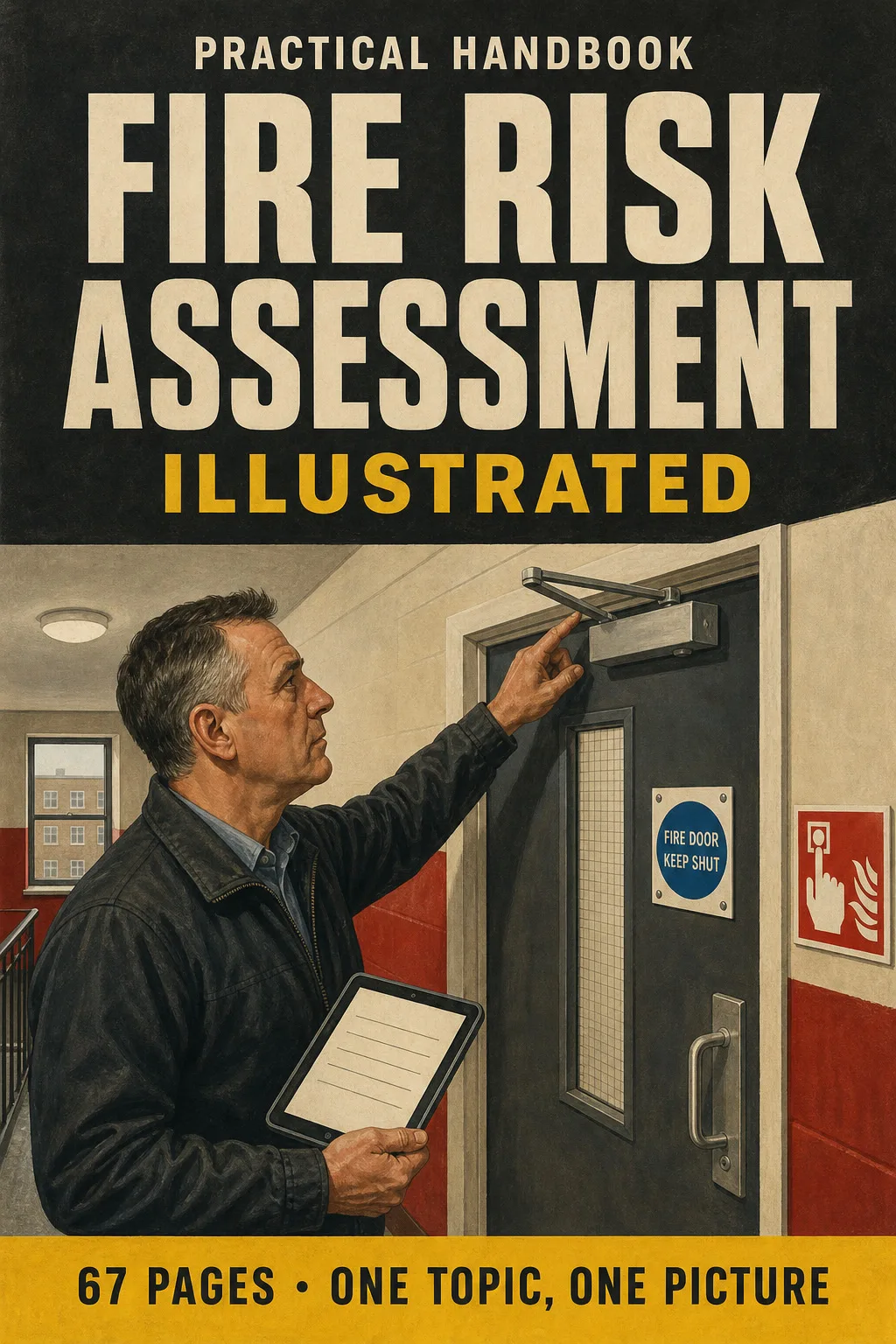
The fire triangle, the five steps, people at risk, means of escape, fire doors, alarm categories, emergency lighting and rating the risk. Every topic has its own page: first the drawing, then what you need to remember. 67 illustrated pages.
🔒 Secure checkout · PDF by email · 30-day guarantee
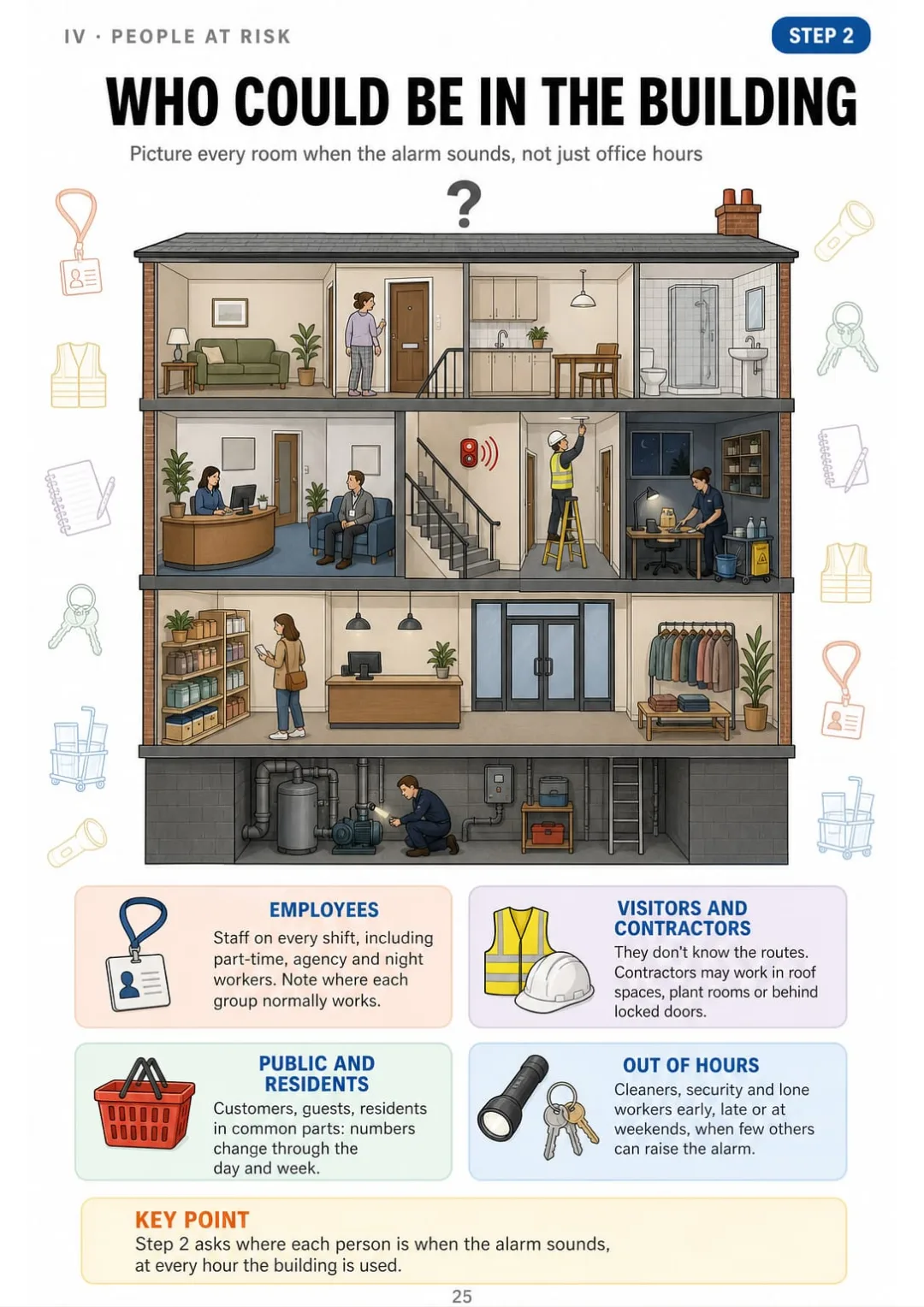
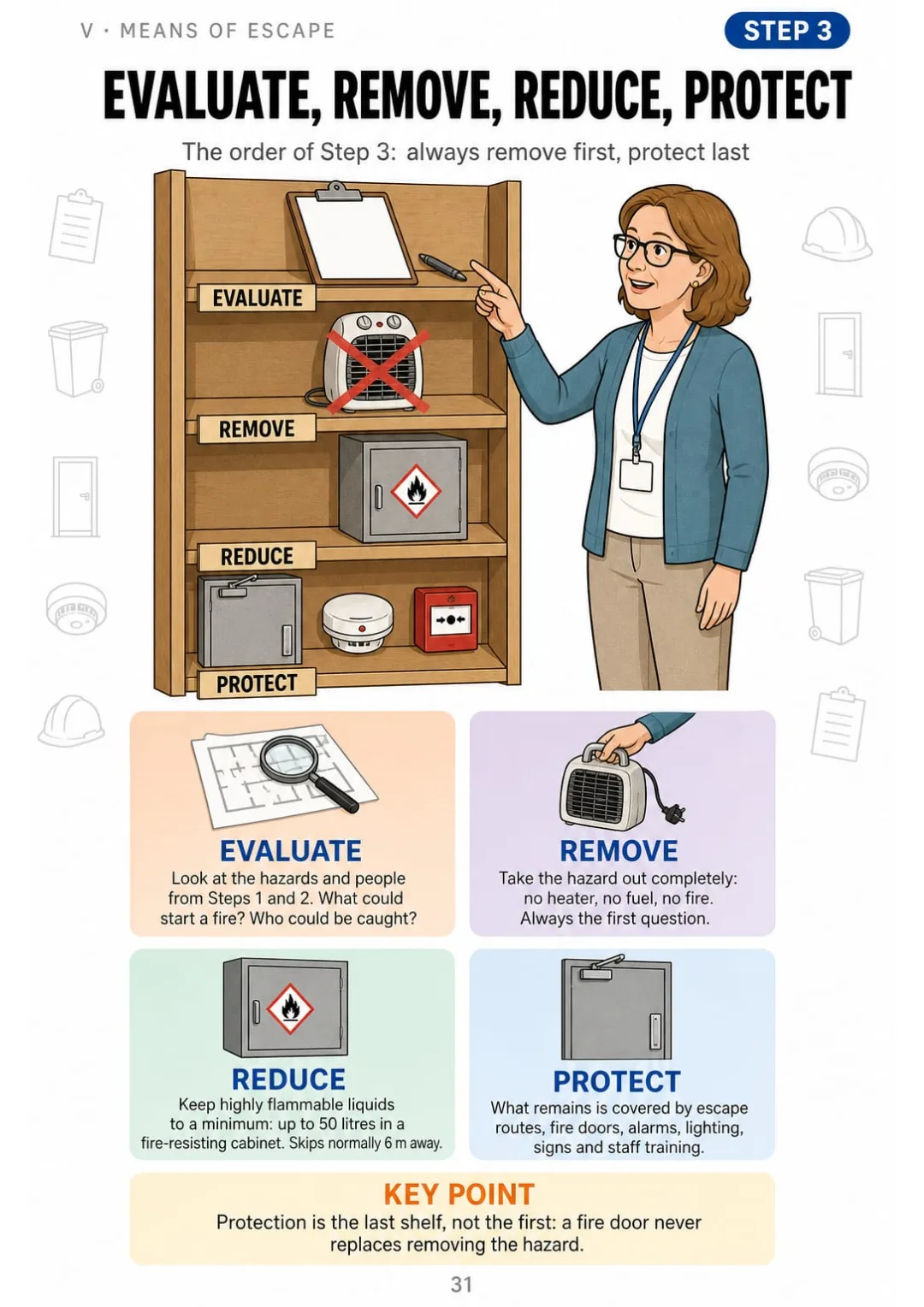
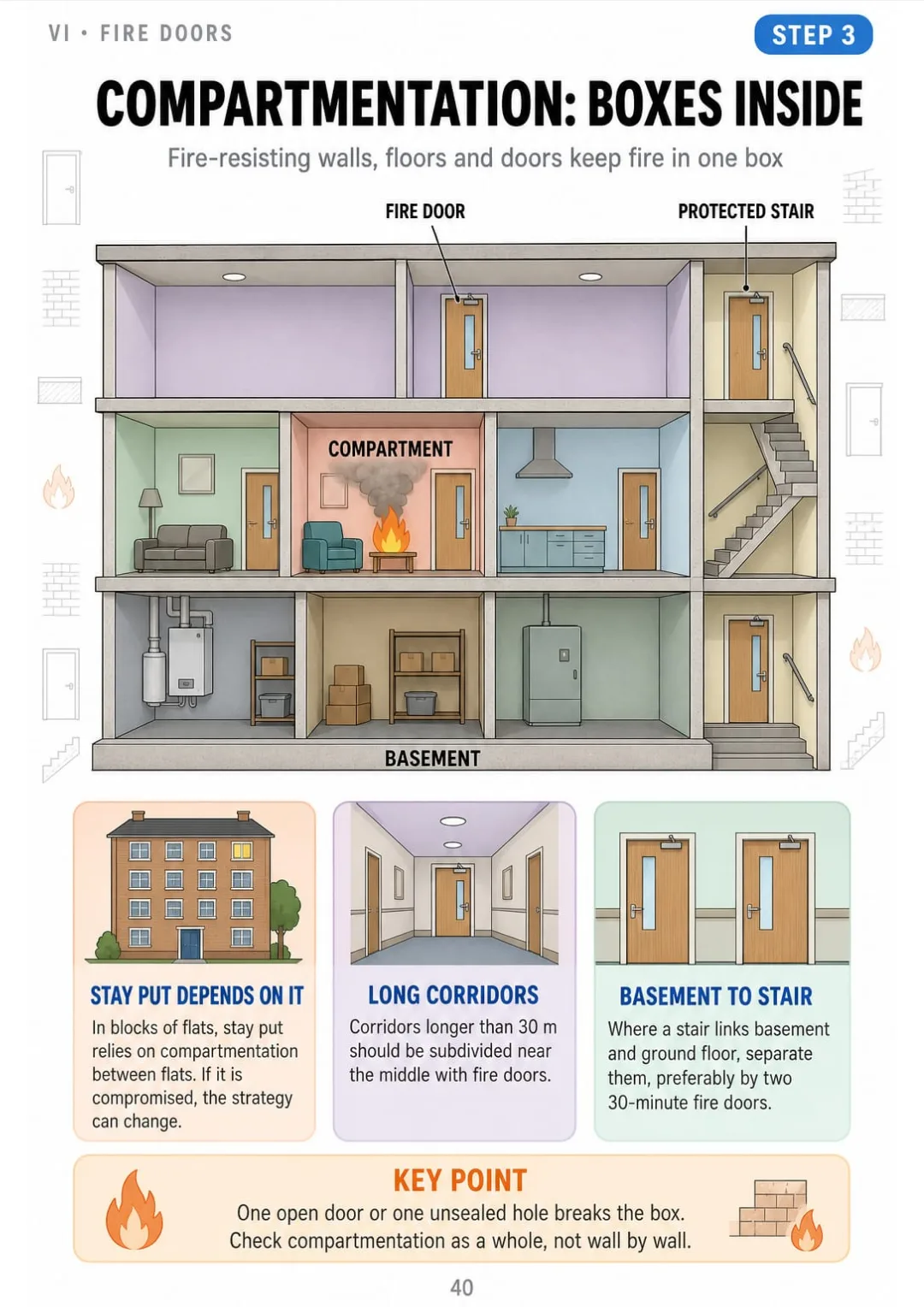
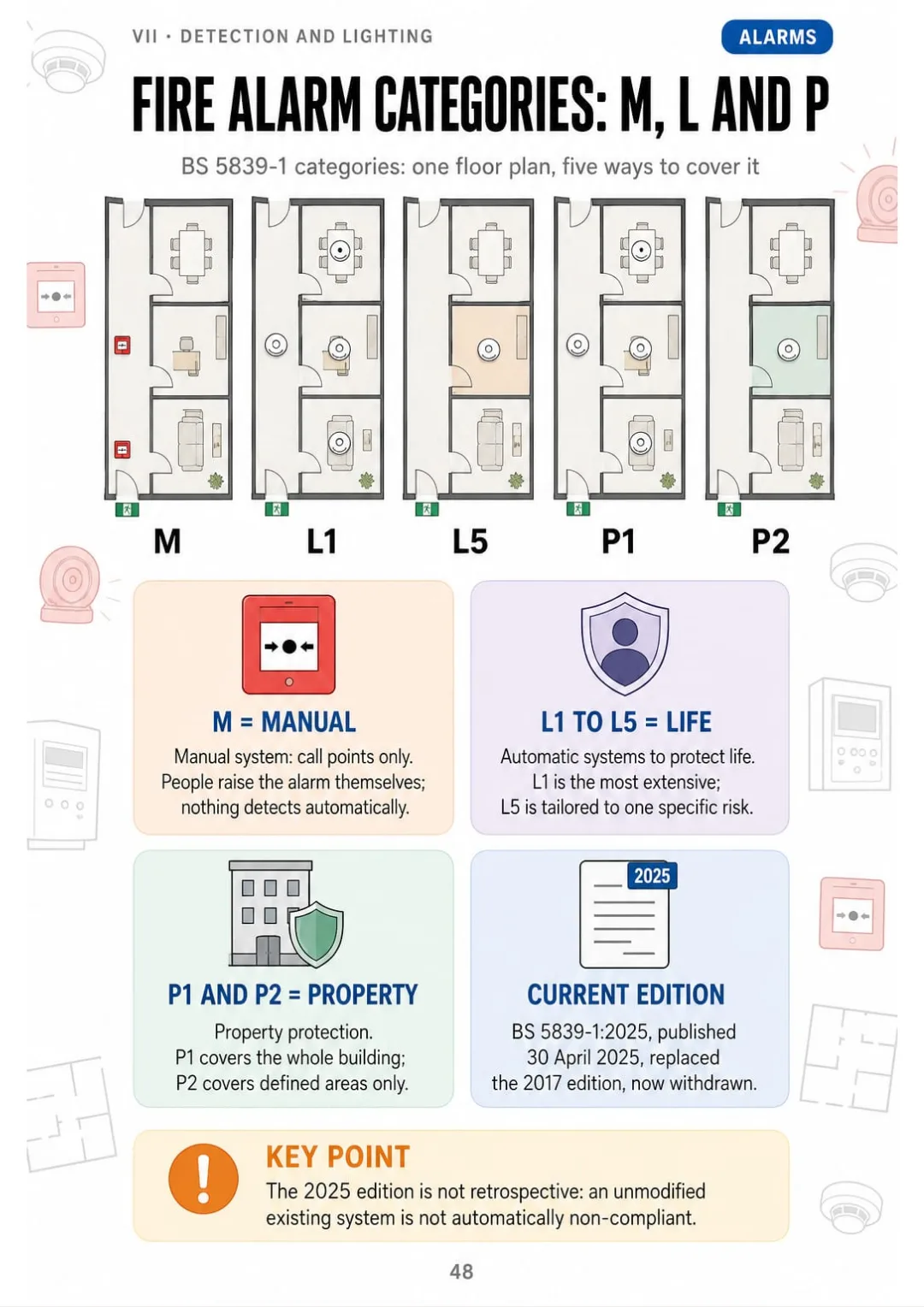
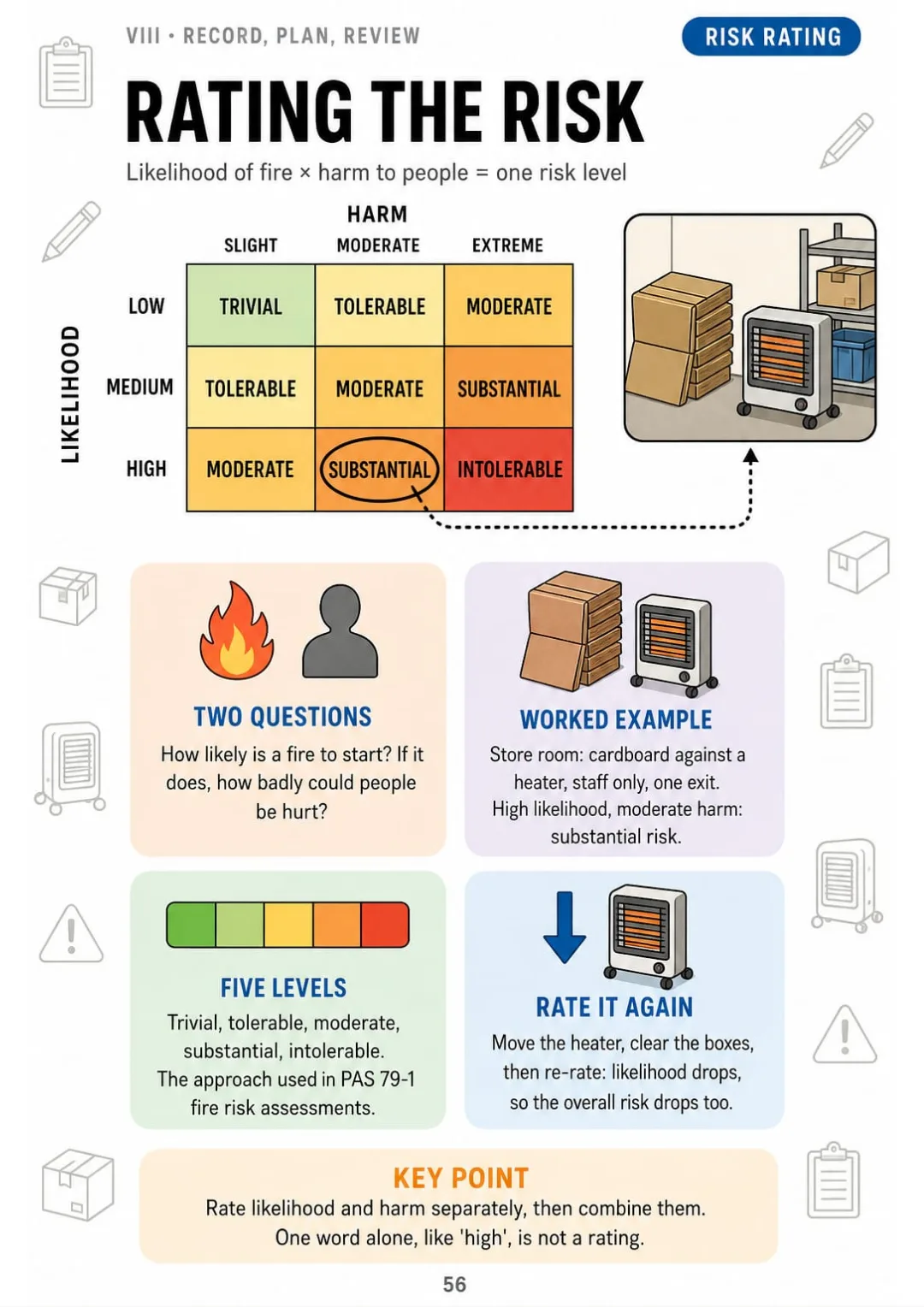
Every page has one big drawing and a box with the figures and rules you need to know:


Swipe to see more →
These are real pages from the book. The table of contents is the full one: 9 parts and 63 topics.
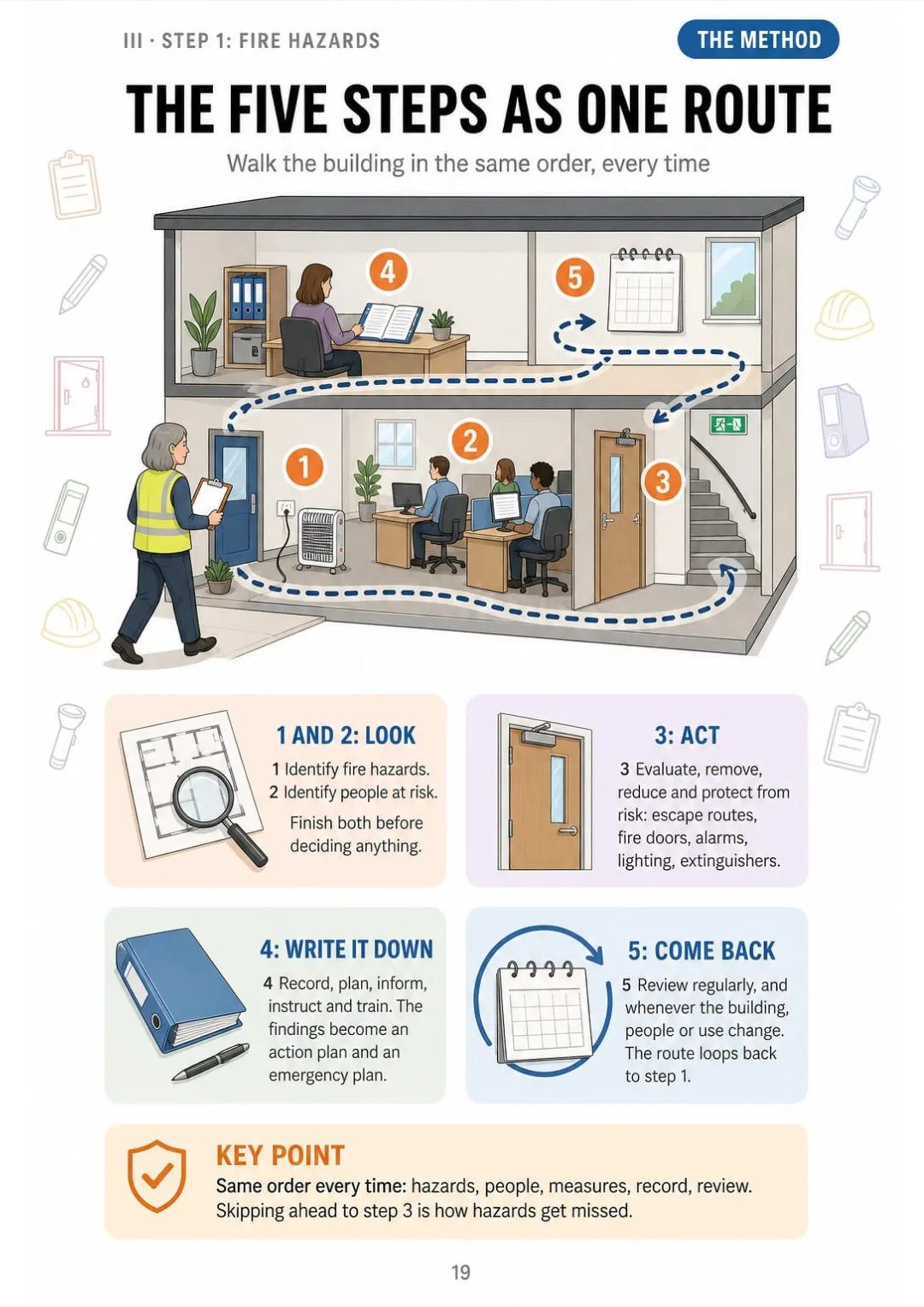
You're walking round a small office with a clipboard, and the five steps are supposed to be in your head. You stop at the kitchen and you can't remember whether people at risk come before the measures or after them.
The guidance does set them out. But it sets them out over pages of paragraphs, each step buried in clauses, so by the next evening the order has blurred again.

In the book the five steps are one page and one walk: hazards, people, measures, record, review, drawn as a route through the building, each step a stop you can see.
The rest works the same way: the fire triangle, travel distances, fire door gaps, alarm categories and the risk matrix. Each one has its own page.
You walk the next building in the same order and write your findings without going back to the guide.

The law and your role, how fire starts and spreads, the five steps from hazards to review, means of escape, fire doors and compartmentation, detection and lighting, and a practice section: 67 pages, all illustrated
Think of it this way:
You're standing at the far end of a corridor in a care home and you need to decide: is this a dead end, and how far is too far to travel?
You open the book at travel distance and there it is: one direction or two, drawn on a floor plan, with the figures in a box beside the drawing.

The same with fire doors, alarm categories, emergency lighting, the risk matrix and the action plan: each one on its own page.
Fire Risk Assessment Illustrated is 67 illustrated pages in 9 parts, with two walk-throughs, the numbers to have at hand and the five steps at a glance at the end.
What you see drawn, you don't have to memorize.
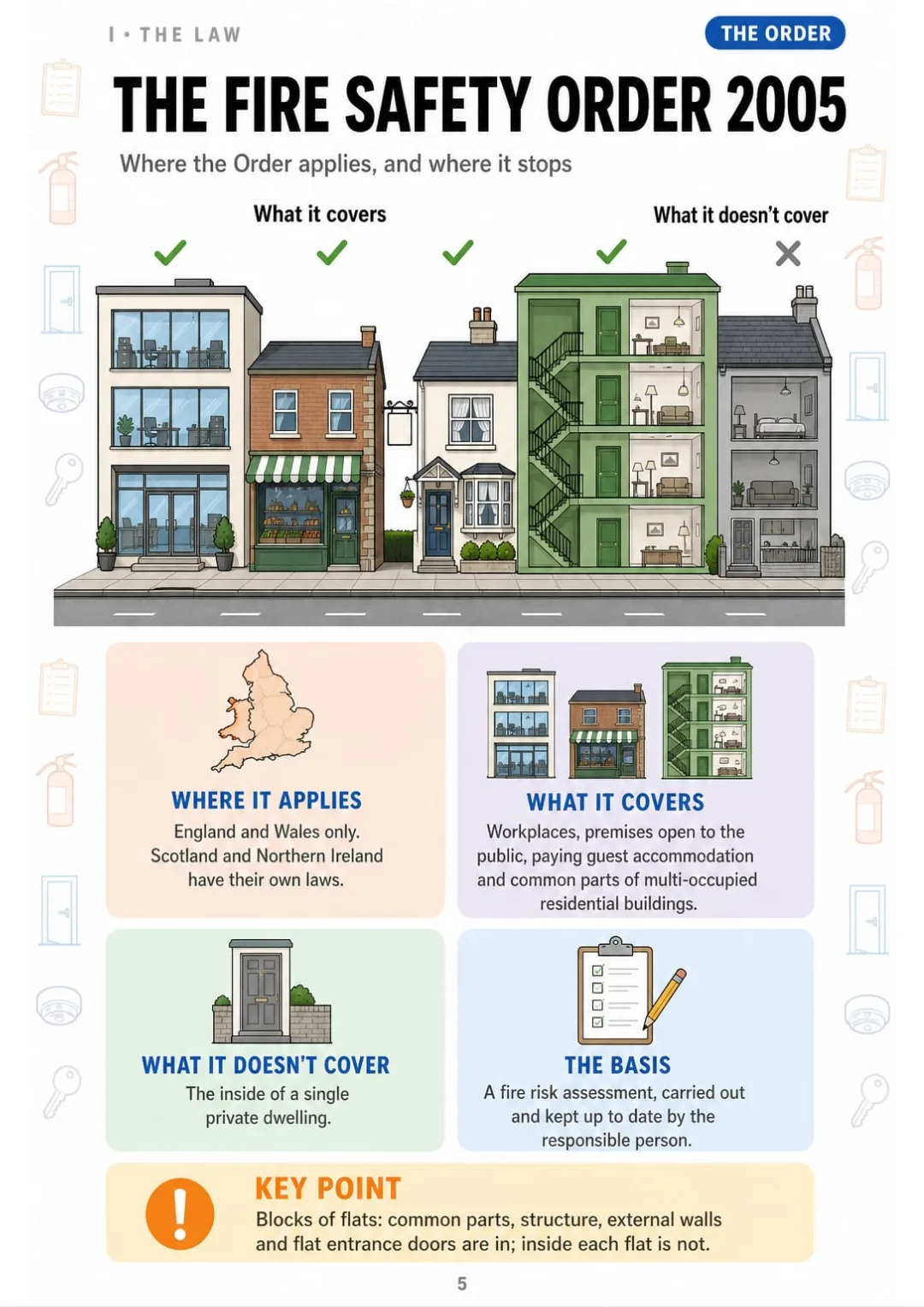
The Fire Safety Order in one page, who the responsible person is, what changed in 2021, 2022 and 2023, blocks of flats, the inspector's visit, Scotland and Northern Ireland, and what a competent assessor knows.
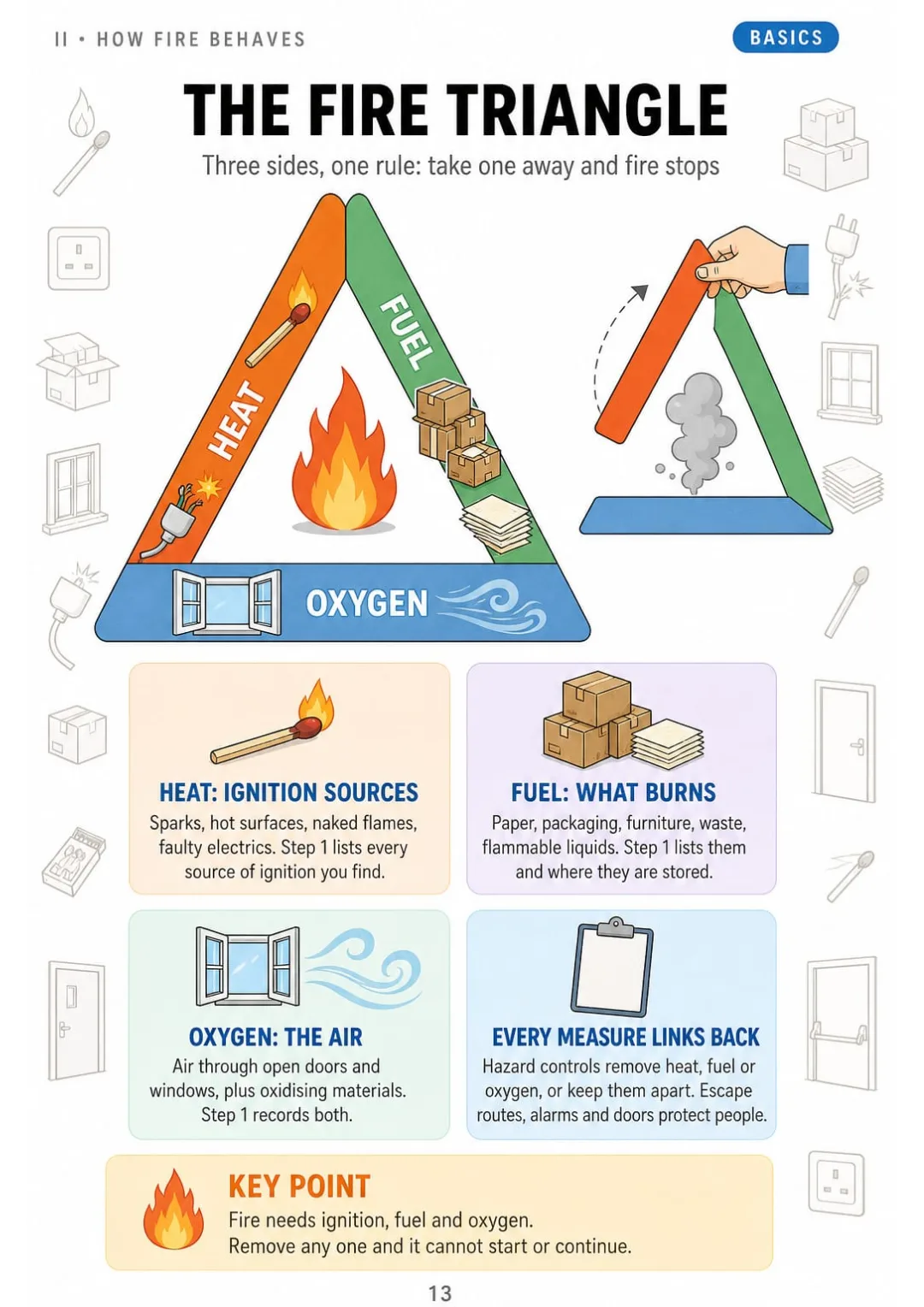
The fire triangle, the four ways fire spreads, why smoke kills first, fire growth up to flashover, classes of fire and arson.
The five steps as one route, then sources of ignition, fuel and oxygen, hot work and contractors, and dangerous substances under DSEAR.
Who could be in the building, people especially at risk, sleeping risk, PEEPs, occupant numbers and evacuation strategies.
Evaluate, remove, reduce, protect, then the escape route end to end: travel distance, the 45° rule, dead ends, inner rooms, exit widths, fastenings, protected stairways and assembly points. So you can stand in a corridor and decide whether it works.
Compartmentation, fire stopping, the anatomy of a fire door, FD30 and FD60, gaps, the self-closer test, hold-open devices and flat entrance doors.
Alarm categories, detectors and call points, alarm testing, BS 5839-6 in flats, emergency lighting and its testing, safety signs and extinguishers by colour.
Rating the risk, significant findings, the action plan, the emergency plan, training, the logbook and when to review.
Walk-throughs of a small office and a block of flats, the numbers to have at hand, the five steps at a glance and frequent mistakes.
At the end of the book: Two walk-throughs (a small office and a block of flats), the numbers to have at hand and the five steps on one page.
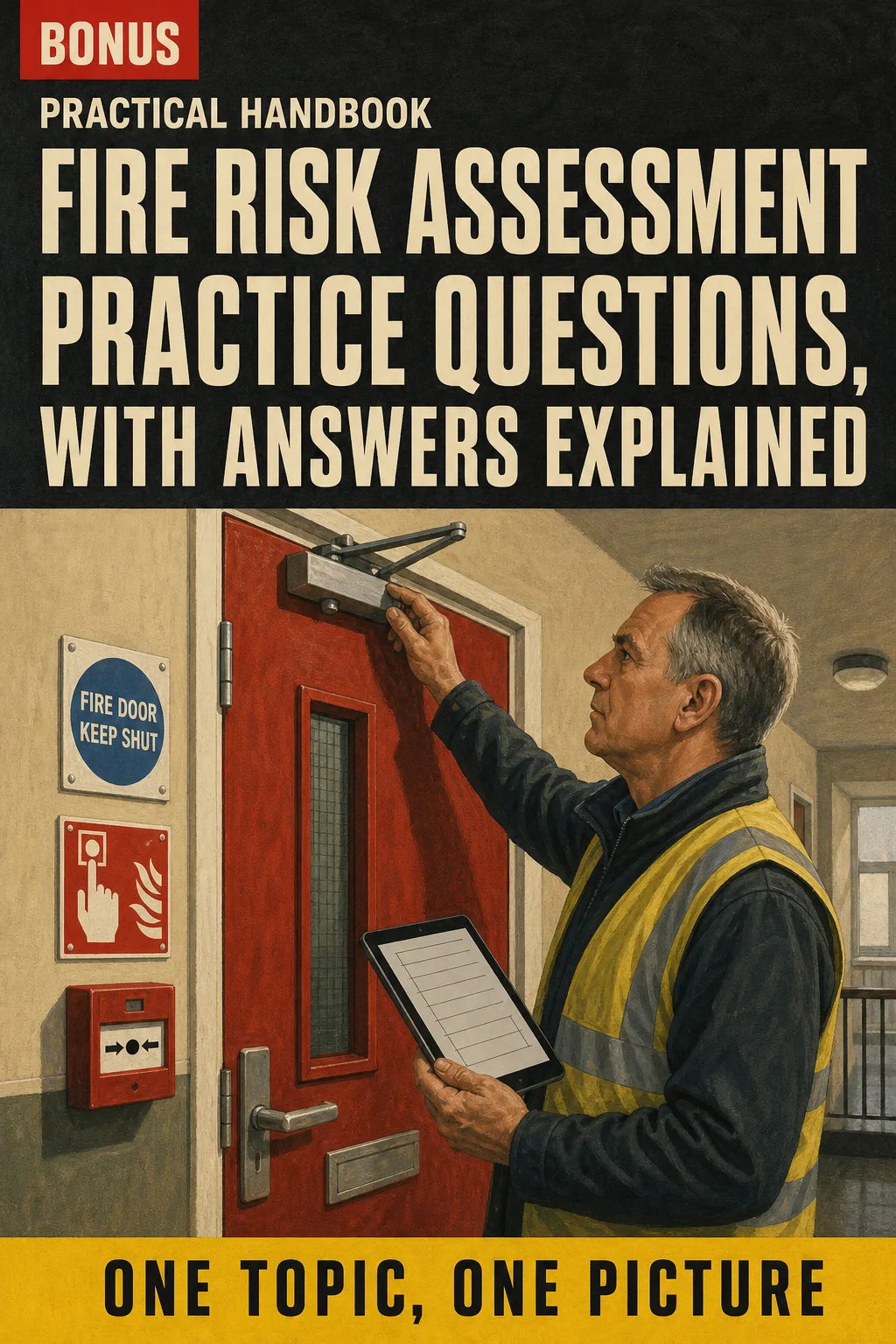
Exam-style questions on every chapter, each with the answer and the reason behind it, so you find your gaps before the exam does.

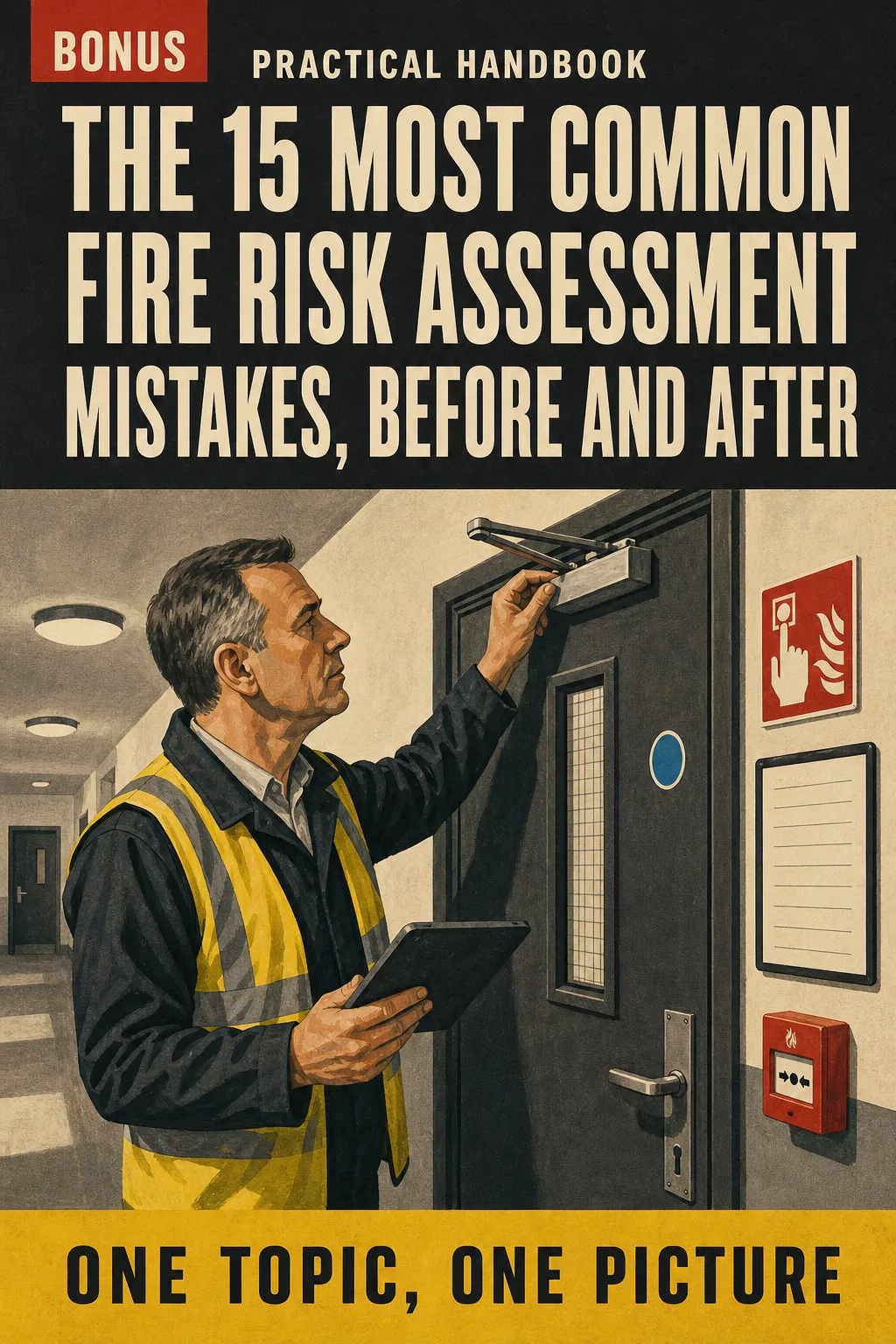
Fifteen frequent mistakes drawn side by side with the right version, from wedged fire doors to vague action plans, to review in an evening.
📄 This is a digital PDF book sent to your email: nothing is printed or shipped.
PDF by email: We email you Fire Risk Assessment Illustrated as a PDF, together with the two free books. It's a single payment: no installments, no extra charges.
Each evening you open one topic, see it drawn and know where it fits in the five steps, even after years away from exams.
You revise the numbers to have at hand and the five steps at a glance, then test yourself with the practice questions and their answers.
You print the pages you need and take them round the building, so the fire doors, alarms and escape routes are checked in the same order every time.
📄 This is a digital PDF book sent to your email: nothing is printed or shipped.
Try Fire Risk Assessment Illustrated for 30 days, bonus books included.
We refund everything if the file won't open, if the book isn't what you see here, if you were charged twice or if the email doesn't arrive. Just email us.
You pay once. No subscriptions.
Yes. It is written for people preparing a Level 3 or Level 4 fire risk assessment qualification and for those already on site. It starts from the law but goes into compartmentation, fire door gaps, BS 5839-1 alarm categories and rating the risk, so it works as structured revision, not a beginner's leaflet. Check your course syllabus against the contents list above.
From the Regulatory Reform (Fire Safety) Order 2005 as amended by the Fire Safety Act 2021 and the Building Safety Act 2022, the Fire Safety (England) Regulations 2022 and the HM Government fire safety guides, with reference to Approved Document B and the relevant British Standards. It is written for England and Wales; note that the 2022 Regulations apply in England only. Scotland (Fire (Scotland) Act 2005) and Northern Ireland have their own law, and one page explains what is different.
No. It is an independent illustrated study book, not published or endorsed by any government department, awarding body, register or fire and rescue service.
No. It helps you study and revise, but it doesn't replace accredited training. It doesn't give you a certificate, a qualification or a place on a professional register, and reading it doesn't make you a competent assessor.
No. They are written for this book, in exam style, with the answer and the reason behind it.
As a PDF by email, at the address you give when you pay.
No. It's a one-off payment, with no subscription.
Yes. The PDF is ready to print, at home or at a print shop, so you can take the pages round the building.
You have 30 days. We refund everything if the file won't open, if the book isn't what you see on this page, if you were charged twice or if the email doesn't arrive: just email us.
No more rereading the guidance with nothing to show for it.
The five steps, the fire door and the alarm panel: you see them drawn.
You reach the exam or the inspection knowing where everything is.
Drawings make studying faster.
The book is right below.
One-time payment: US$ 27 · Guarantee: 30 days · PDF by email
YES, I WANT FIRE RISK ASSESSMENT ILLUSTRATED FOR US$ 27📄 This is a digital PDF book sent to your email: nothing is printed or shipped.